Portfolio Details
Lost Landscapes
Work In Progress
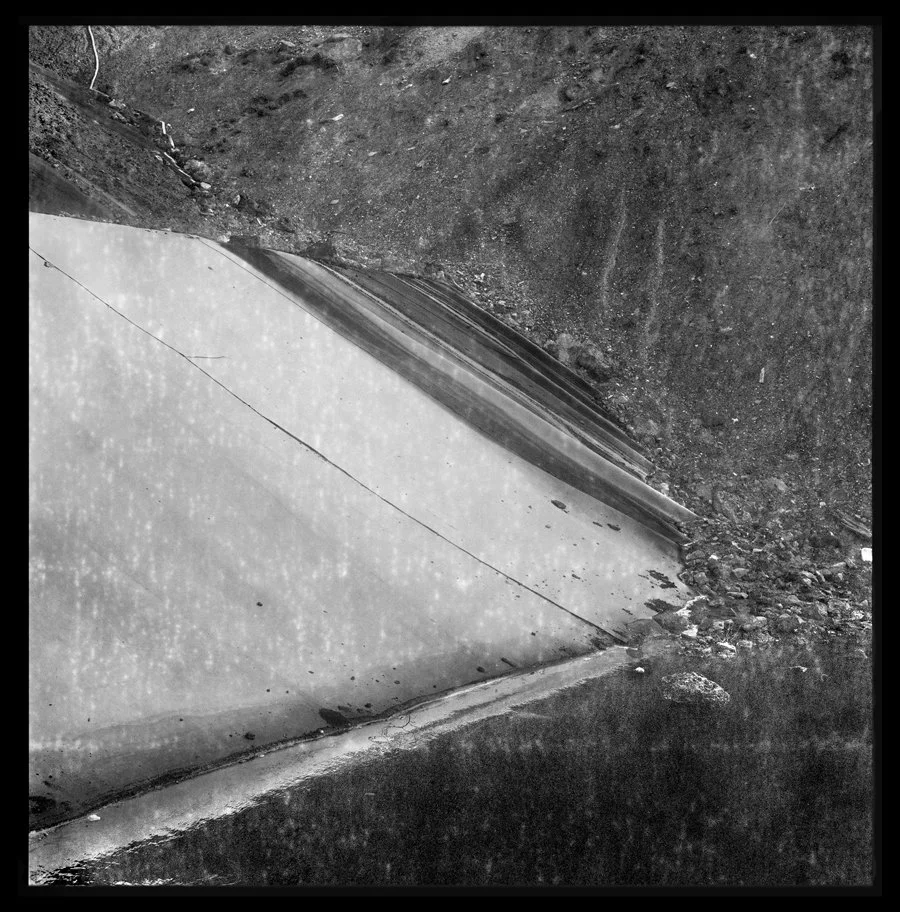
In the mid 1990's, I used my Rolleiflex 6x6 for probably the last time, exploring the latter days of the Orgreave open cast mine, on the site of the notorious Orgreave Coal Pit, where the height of the Coal Miners’ Strike played out in full view of the worlds media in 1984.
By the time I visited the open mine was being wound down, and pipes were being laid to flood the area to form a series of large lakes, around which a massive new housing development was to be built.
The area is now called Waverley, where over 2,000 new homes have been built. The only reference to the sites noteworthy history is a small stone monument located on a hill above the new development.
I moved away from photography for a period shortly after making these pictures and never processed the film. In fact, I lost it completely through various house moves, only to find a few rolls in a box of random odds and ends in the attic about a year or so ago. I got the films processed not remembering at all what was on them. The film had suffered badly from poor storage and general degradation, and once I realised what the images were of I was very distressed. I could see images that really excited me, but only through a fogged and degraded mess. I considered them lost.
However, I keep on coming back to the images and exploring them, and after a year of some anguish have learnt to embrace and enjoy their condition as being part of their story. They've taken on a new life, especially since I’ve revisited the site and encountered the sprawling new suburban settlement and conservation park, with the almost watchful eye of the Treeton Village Church still sitting on the hill above. I'm currently puzzling over how to deal with them.
Matthew Conduit, January 2026
LAND
Exhibition
Graves Art Gallery, Sheffield, UK
2nd January-15th June 202
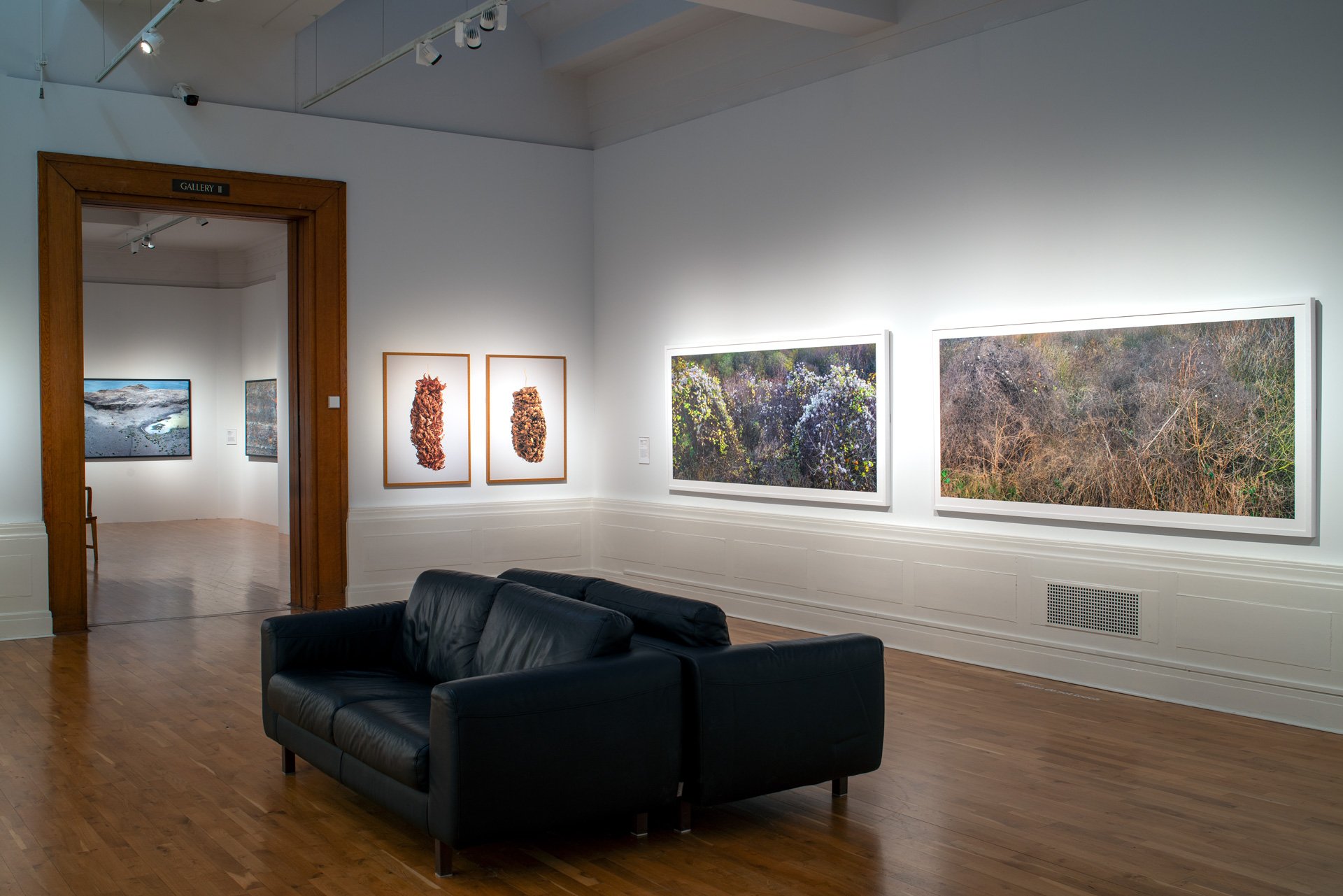
"The Areas of Outstanding Natural Beauty and National Parks might be our destinations, and these are managed, georgic places, where much hard work and effort maintains an ecological balance. However, true pastoral is more likely to be found in the edgelands, where our slipstream has created a zone of inattention. Here, even plants and animals meant to live oceans apart are finding their point of balance in the overlooked landscape we flash by in the blink of an eye."
From 'Edgelands, Journeys into England's True Wilderness'. Paul Farley & Michael Symmons Roberts. Jonathan Cape, 2011
Born in Nottingham, Matthew Conduit arrived in Sheffield in 1978 to study fine art at Sheffield City Polytechnic and this city has remained his creative base and home.
Conduit has had a lifelong fascination with overlooked, marginal places. These are all once thriving industrial sites, that have become an overlooked domain of self-seeding invasive plant species, and the feral. They are also places of mystery and beauty that are, like his images, in continuous flux, shaped not only by time, but by the social and economic environments that have determined their changing function and purpose.
For more than three decades Conduit has revisited the same sites around Sheffield and continuously worked and reworked his images. In his beautiful large scale prints the high resolution and detail is fundamental to the expression of his ideas about aesthetics, place, context, and history, resulting in arresting images that slowly reveal their content.
The Land exhibition features a careful selection of photographs made from the last ten years, all never exhibited previously, and includes later work that explores the former Alum mining sites and cliff faces along Yorkshire’s east coast, the first time in many years he has left the city to make work. ‘Treasure’, still life images that document found objects he has collected over the years whilst exploring the landscape, also feature for the first time.
Each of Conduit’s images serves as a visual narrative, weaving together the threads of his ongoing dialogue with forgotten places, inviting viewers to witness the transformation and rediscovery of these overlooked corners of the world.
Martin Hinchcliffe December 2023
Matthew Conduit would like to thank MM Design, ASAP Digital Ltd. and Framework Gallery for their support towards producing this exhibition.
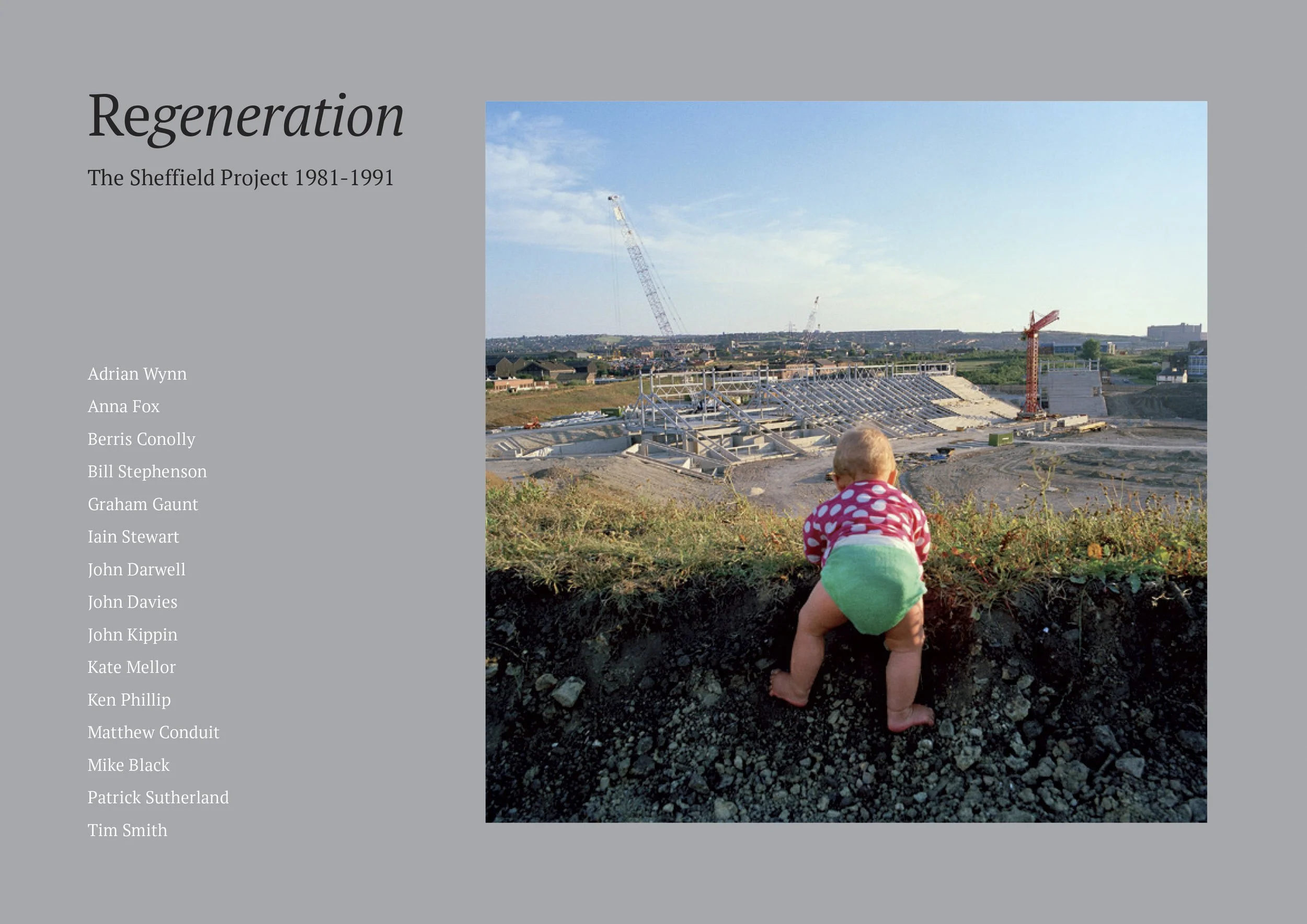
Regeneration - The Sheffield Project 1981-1991
Untitled Gallery was founded in 1979 by a group of Fine Art students from Sheffield Polytechnic, and was one of the first galleries in the country to be wholly dedicated to photography. It provided gallery, darkroom and education facilities in a small group of rented shops in Walkley, Sheffield, before relocating to larger premises in the city centre in 1988. In 1996 Untitled was renamed Site Gallery, and celebrated its 40th anniversary in 2019.
Throughout the 1980s Untitled commissioned and exhibited a series of photographers and artists to document and explore Sheffield at probably the most transformative stage in its history since the Industrial Revolution. Massive changes in the city's industrial and employment base were wrought by both national recession and government economic policies. The residents of the so-called ‘Socialist Republic of South Yorkshire’ suffered a severe impact on their quality of life, with the reduction of much of the capacity of the steel industry, the impact of the Miners' Strike and pit closures, and mass unemployment, all in the shadow of the fading Cold War.
However, the city was fighting hard to forge a new identity and future by securing the World Student Games, the creation of the Sheffield Development Corporation and the vast Meadowhall retail development. Sheffield was also one of the first cities in the UK to champion the development of the local Cultural Industries, of which Untitled Gallery was a part, buoyed by the ongoing success of its music industry with the Human League, Cabaret Voltaire, Fon Studios, Warp Records and others.
The eventual transformation of the lower Don Valley and the World Student Games sports facilities suggested a new future for the city, although in the minds of some it was laden with debt and self-doubt and took many years to realise its full and varying impact.
It was this turbulent decade that Untitled sought to explore, with no certain agenda except to invite artists and photographers to observe and report back. The key vehicle for this was The Sheffield Project, an artist-commissioning programme of new work that ran from 1987 to 1991, involving a series of young and emerging artists, recruited both locally and from across the UK.
More than thirty years later, by anybody’s reckoning Sheffield is transformed, and looking at images from the period it is sometimes hard to recall that city. This book is published to coincide with a new exhibition of the work at Weston Park, Sheffield. It not only features a selection of artists and photographers involved in The Sheffield Project, but also includes other work from the period curated by Untitled Gallery, including John Davies’ pivotal Sheffield Landscapes and Bill Stephenson’s Hyde Park portraits Streets in the Sky, amongst others. This selection draws together for the first time a broader collection of photography that charts Untitled Gallery’s involvement in producing new work concerning the city, and provides a wider record of Sheffield during that decade of immense change and new hope.
This reappraisal of the work also provides an opportunity to examine the period in terms of the development of fine art and documentary photography in the UK. All the work was produced in the pre-digital age when new colour processes and documentary and fine art practices merged to create a distinctly British (as distinct from American) aesthetic and direction. This was largely fuelled by the new fine art and photography degree courses of the time in cities such as Nottingham, Newport, Derby and Sheffield.
Matthew Conduit, Curator, September 2020
Alum
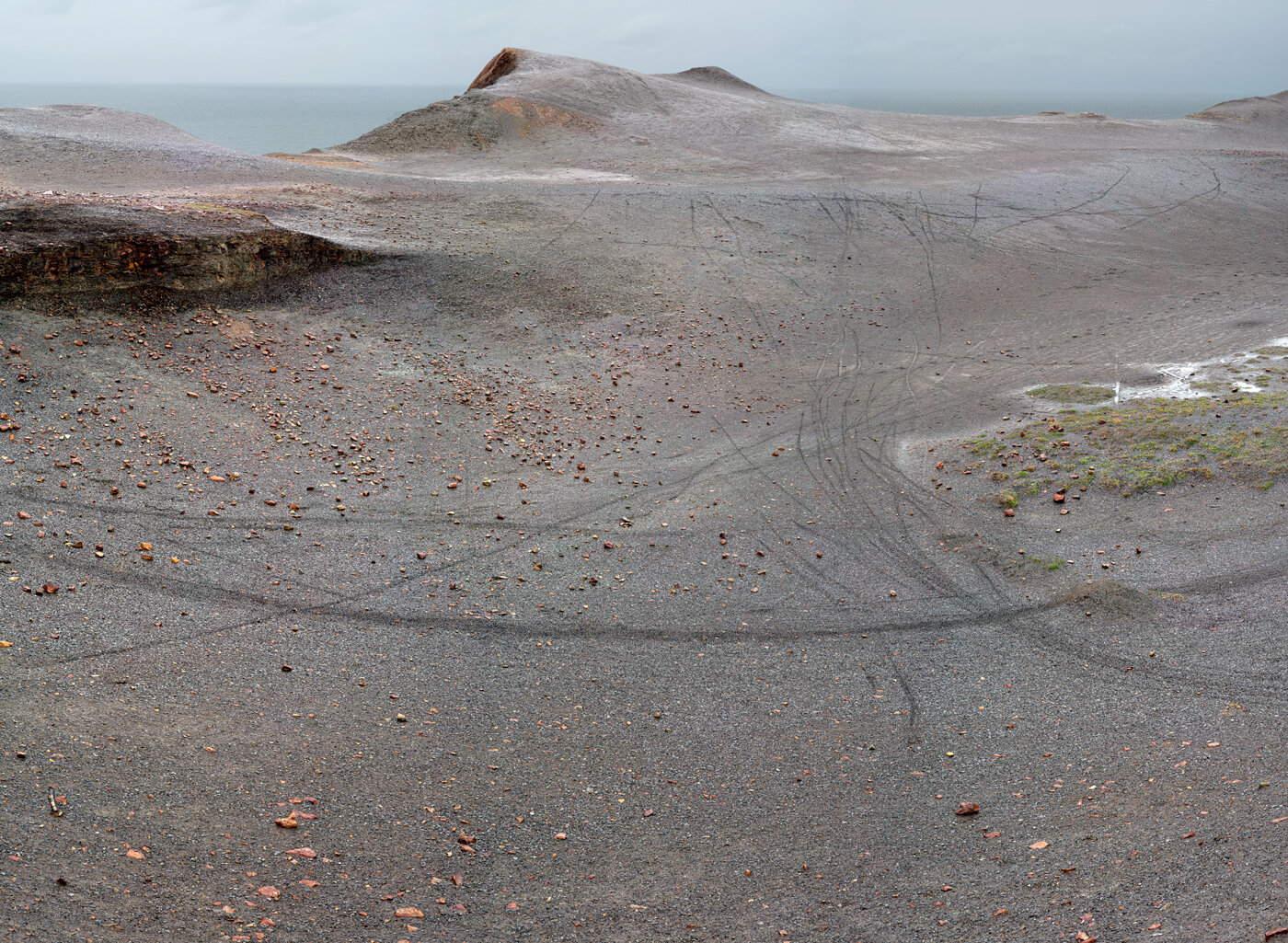
Dating back centuries, alum was essential in the textile industry as a fixative for dyes. In the 15th century, Europe’s Alum production was controlled by the Catholic Church and ultimately by the Pope, and the vast sums of money from Alum exports in Europe went to the Vatican. Alum was discovered on the Yorkshire coast by landowner Thomas Chaloner and has was mined for up to 300 years.
Alum was extracted from quarried shale stone and then burnt in huge piles for 9 months, before transferring it to leaching pits to extract the aluminium sulphate liquor. Human urine was then added to turn the sulphate into ammonia aluminium sulphate . At its peak of alum production required 200 tonnes of urine every year, and was imported from London, Sunderland and Newcastle.
The last Alum works on the Yorkshire Coast closed in Sandsend in 1871. Conduit is fascinated by this alien landscape, still scarred centuries later by the toxic process.
Matthew Conduit worked these sites from 2018-2020.
Via Gellia
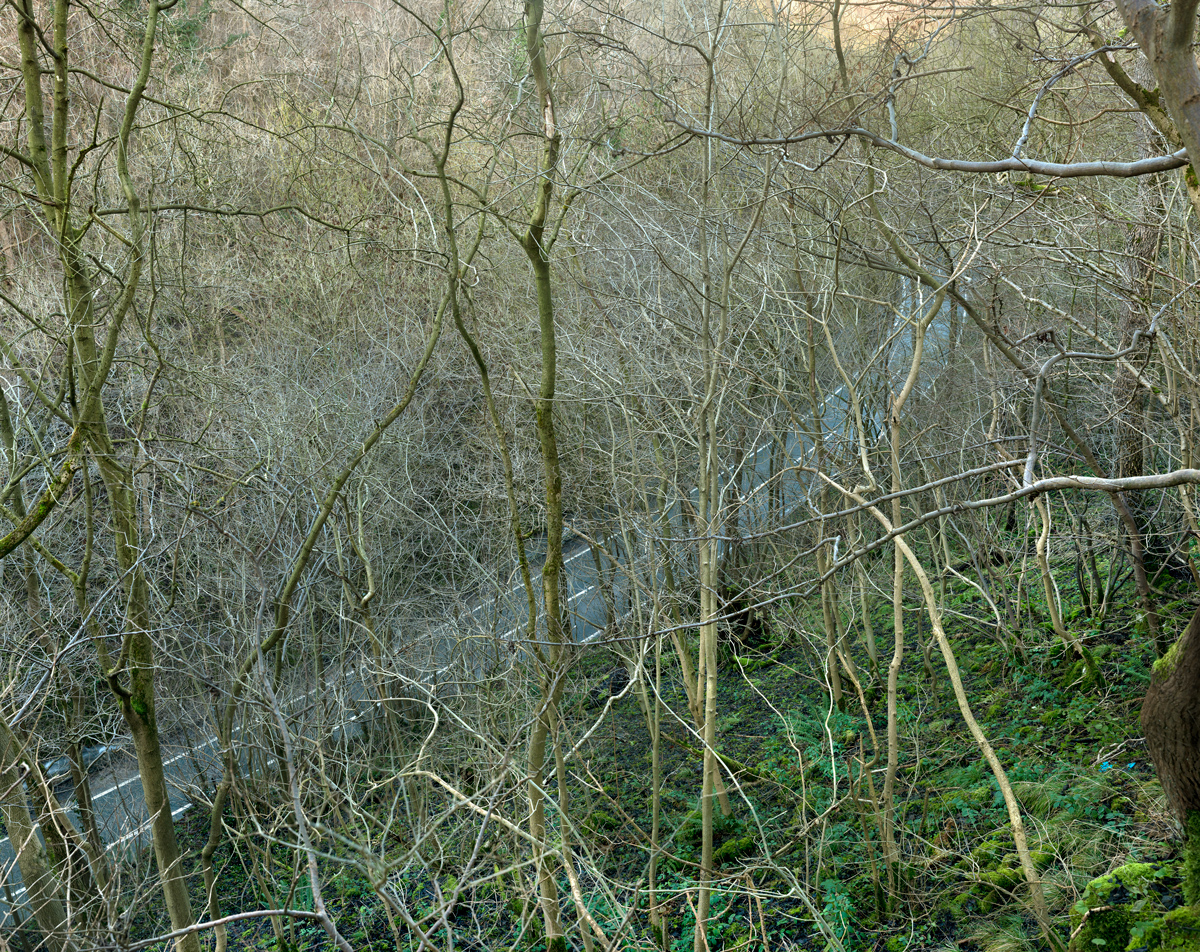
Via Gellia is a limestone valley in the Peak District in Derbyshire, England. It is named after Phillip Eyre Gell, who built the road running the valleys' course in 1790. As Gell claimed Roman descent the naming was latinised. The road (now the A5012) connected all of Gell's lead mines around Wirksworth to the new smelter at Cromford, but the route may have been used as early as 1720 for transporting stone from the Gell's quarries at Hopton. The valley is believed to have been mined before Roman times.
Today, the road has developed a reputation as being dangerous with a disproportionately high casualty rate, due to its narrowness, heavy goods use and its canopy of overhanging trees resulting in a persistently damp surface.
Quarry

Matthew Conduit was commissioned in 2011 by the Wirksworth Arts Festival in Derbyshire, England, under the ‘Situation Critical’ programme. He responded by concentrating on the huge quarries that directly border the town and have so fundamentally shaped its history and topography over centuries. The resulting large scale images depict in detail the huge quarry faces that almost 'map' this history.
Matthew Conduit would like to thank Tarmac and ASAP Digital for their support and assistance in producing this work.
The Wirksworth Festival: www.wirksworthfestival.co.uk
Woodland

This work was developed on an ongoing basis from 2004 to 2011. Wood Land Portfolio #1 represents the early explorations up to late 2008, including work made in Derbyshire, particularly Lathkill Dale. Wood Land Portfolio #2 represents an eventual return to the 'edgelands' of the city, and forms the basis of the 'Chora' exhibition.
The production of this work up to early 2011 was supported by the National Lottery through Arts Council England.
The publication 'Chora' is made up of a sequence developed from Portfolios #1 and #2.
Lithica

Pedreres de s'Hostal, Ciutadella, Menorca, Spain.
Lithica is a non-profit making cultural association whose objectives are the restoration, rehabilitation and transformation of the sandstone quarries at Pedrreres de s'Hostal, Menorca.
The sandstone is a permeable stone of diverse strength and coloured cream white to golden ochre, and is found all over the southern part of the island. It was used by neolithic man to construct megalithic monuments. Since around 200 years ago, man has cut huge, inter-connected 'gallery' spaces under the landscape in this location, extracting stone for building.
Matthew visited to make pictures in 2006 and 2009.
Industrial Valley

Work produced between 1984 and 1987 exploring the key industrial valley of Sheffield, the Upper Don Valley and the Lower Don Valley, at a time of huge post industrial and social upheaval. This work was exhibited at the Mappin Art Gallery, Sheffield in 1987 (curated by Mike Tooby) and Axiom Centre For The Arts, Cheltenham in 1988.
Examples from the series was most recently featured in the exhibition ‘The Sheffield Project’, at Weston Park Museum, Sheffield in 2020/21, and in the accompanying publication ‘Regeneration - The Sheffield Project’, both curated, edited and published by Matthew Conduit / Untitled print Studio.
All negatives scanned and re-worked in 2016-2020.
Groundwork

Groundwork #1 was originally produced between 1982 and 1985, and initially exhibited at Impressions Gallery, York and Axiom Centre For The Arts in Cheltenham. Some of the work also featured in Image and Exploration, Directions In British Photography 1980-85 at the Photographers Gallery, London, and subsequent East European British Council tour. The work also featured in Disturbed Ground, a group show with Keith Arnatt, John Davies and Paul Hill, at the Collins Gallery, Glasgow.
Groundwork #2 was an extension of this work, produced between 1988 and 1990.
All original negatives scanned and re-worked in 2016-21, expanding the portfolio with new, previously unused images.